beehiiv Review 2026: Powerful Newsletter Growth, Real Tradeoffs
A field-tested look at beehiiv's editor, growth tools, pricing, monetization, website builder, and where smaller newsletters may feel the weight.
beehiiv is one of the strongest newsletter growth platforms in 2026, especially if you want referrals, recommendations, paid subscriptions, an ad network, automations, analytics, and website tools in one product. The main tradeoff is that beehiiv can feel heavy or expensive once a small newsletter needs paid growth, monetization, or automation features before it has meaningful revenue.
This review is based on beehiiv's official pricing and feature pages, public user comments, and our own product testing notes. Pricing and feature details were last checked on May 30, 2026.
Key takeaways#
- beehiiv is best for serious newsletter operators who want growth, monetization, referrals, recommendations, automations, and analytics in one platform.
- beehiiv's editor and growth tooling are real strengths, especially for creators who want to operate a newsletter like a media business.
- The tradeoff is weight and pricing. beehiiv has a generous free plan, but small newsletters can still feel the jump when they need paid features before the newsletter is making money.
- Users praise beehiiv's power, customization, referrals, and creator focus, but some complain about website-builder limits, complexity, support, reliability, and pricing changes.
beehiiv at a glance#
| Category | beehiiv review |
|---|---|
| Best for | Newsletter operators who want growth, monetization, referrals, ads, automations, and analytics in one platform |
| Main workflow | Build and grow a newsletter publication with a website, email sends, audience tools, and monetization |
| Free plan | Launch plan with up to 2,500 subscribers, according to beehiiv's pricing page |
| Paid plans | Paid plans start at $49/month according to beehiiv's pricing FAQ, last checked May 30, 2026 |
| Newsletter publishing | Strong |
| Website/archive | Strong for editorial newsletter sites, but not always flexible enough for every business-style website |
| Subscriber management | Strong |
| Social promotion | Not the main product focus |
| Monetization | Strong: paid subscriptions, Ad Network, Boosts, direct sponsorships, digital products |
| Automations | Strong |
| Analytics | Strong |
beehiiv review scores#
We scored beehiiv across the areas that matter most for newsletter creators and operators.
| Category | Score | Our take |
|---|---|---|
| Newsletter editor | 4.5/5 | The editor is one of beehiiv's strongest parts. It feels built for repeated publishing, not one-off email blasts. |
| Growth tools | 4.7/5 | Referrals, recommendations, Boosts, subscribe forms, pop-ups, and monetization tools make beehiiv one of the strongest growth-focused newsletter platforms. |
| Monetization | 4.5/5 | Paid subscriptions, Ad Network, Boosts, direct sponsorships, and digital products give operators several ways to build revenue. |
| Analytics and segmentation | 4.3/5 | Strong enough for serious operators who want to understand subscriber behavior, sources, and audience groups. |
| Website and customization | 3.5/5 | Good for newsletter sites and archives, but not as flexible as a dedicated site builder if you want a highly custom brand or product experience. |
| Pricing for small newsletters | 3.2/5 | The free plan is generous, but the paid-feature jump can feel early if a small newsletter needs automations, monetization, or advanced analytics before it has revenue. |
| Ease of use | 3.6/5 | Powerful, but not lightweight. The product can feel heavy if your main need is publishing issues consistently. |
Overall: 4.0 / 5#
beehiiv is a strong newsletter growth platform with real depth. It scores highest when you judge it as a serious operator tool for growth, monetization, and analytics. It scores lower when you judge it as a lightweight publishing workflow for early creators who want fewer moving parts.
beehiiv pros and cons#
| Pros | Cons |
|---|---|
| Strong newsletter-native product, not a generic email tool with a newsletter template | Can feel heavy if you only need to publish issues and grow from social posts |
| Generous free plan for starting a newsletter, with up to 2,500 subscribers on Launch | The paid-feature jump can feel expensive for small newsletters that need automations, monetization, or advanced analytics early |
| Good editor and publishing workflow; collaborative editing is a real strength for teams | Some users complain about editor performance, support response time, or reliability in specific workflows |
| Deep growth toolkit: referrals, recommendations, Boosts, forms, pop-ups, magic links | Built-in monetization does not remove the need to sell your own sponsorships or understand your revenue model |
| Strong monetization layer: paid subscriptions, Ad Network, Boosts, direct sponsorships, digital products | Website builder can feel limited if you want a flexible business site, not only an editorial publication site |
| Advanced audience tools: automations, segmentation, analytics, surveys, A/B testing | Social promotion is not the core workflow, especially if X/LinkedIn are your main subscriber acquisition channels |
What is beehiiv?#
beehiiv is a newsletter platform built around growth and monetization. The official beehiiv feature pages describe a platform that includes newsletters, a website builder, podcasts, an ad network, an editor, customization, AI, automations, referral tools, recommendations, analytics, A/B testing, segmentation, surveys, paid subscriptions, direct sponsorships, digital products, API access, and beehiiv MCP.
That feature depth is the point. beehiiv is not trying to be a tiny email editor. It is trying to be the operating system for newsletter businesses.
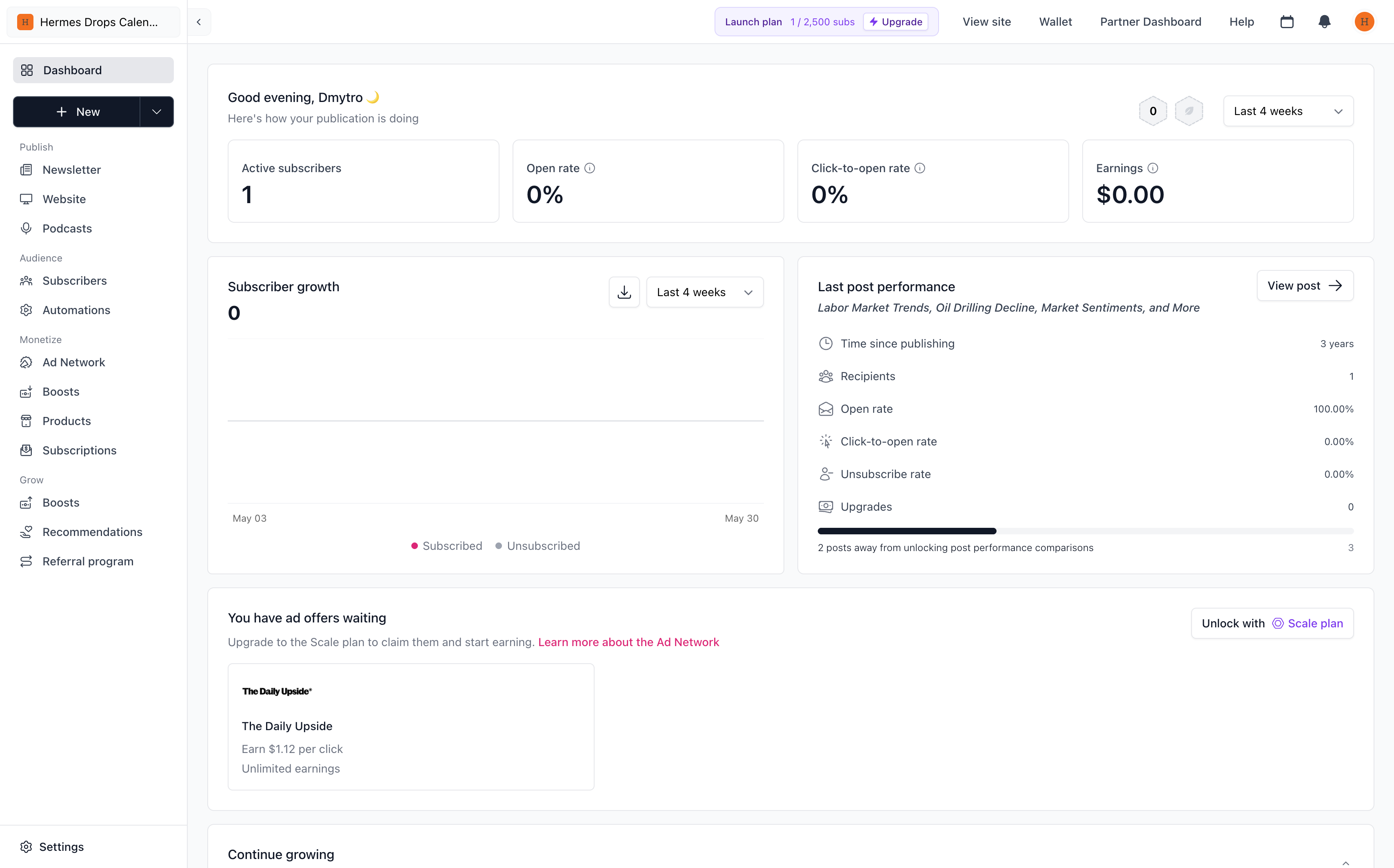
For the right operator, that is useful. If you want to build a publication, test growth channels, monetize with ads or paid subscriptions, and analyze audience behavior, beehiiv gives you a lot of the pieces in one place.
For a simpler creator workflow, that same depth can become the tradeoff. If your main job is writing a newsletter, publishing it, promoting it on X and LinkedIn, and knowing which posts created subscribers, you may not need the full beehiiv suite.
What beehiiv does well#
beehiiv's biggest strength is that it is newsletter-native. It is not a generic email marketing tool with a newsletter template added later.
Newsletter growth tools#
beehiiv has a strong growth story. Its feature pages list Boosts, referral programs, subscribe forms, pop-ups, magic links, and recommendations. These are the kinds of tools serious newsletter operators look for once they move beyond "send an issue once a week."

This is where beehiiv deserves credit. If your newsletter model depends on recommendations, referrals, cross-promotion, ads, paid subscriptions, or sponsorship inventory, beehiiv gives you a real toolkit.
Monetization#
beehiiv's pricing FAQ says it takes 0% of paid newsletter subscription revenue, excluding Stripe's standard processing fees. The feature set also includes paid subscriptions, an ad network, Boosts, direct sponsorships, and digital products.
That makes beehiiv especially attractive for creators who want a publication-style business, not only an email list.
Editor and publishing workflow#
Our testing notes were positive on the editor. The editor felt like one of beehiiv's strongest parts, and user comments support that. In one Reddit discussion, a user who had complaints about reliability still said they "truly love the editor" and specifically praised collaborative editing.
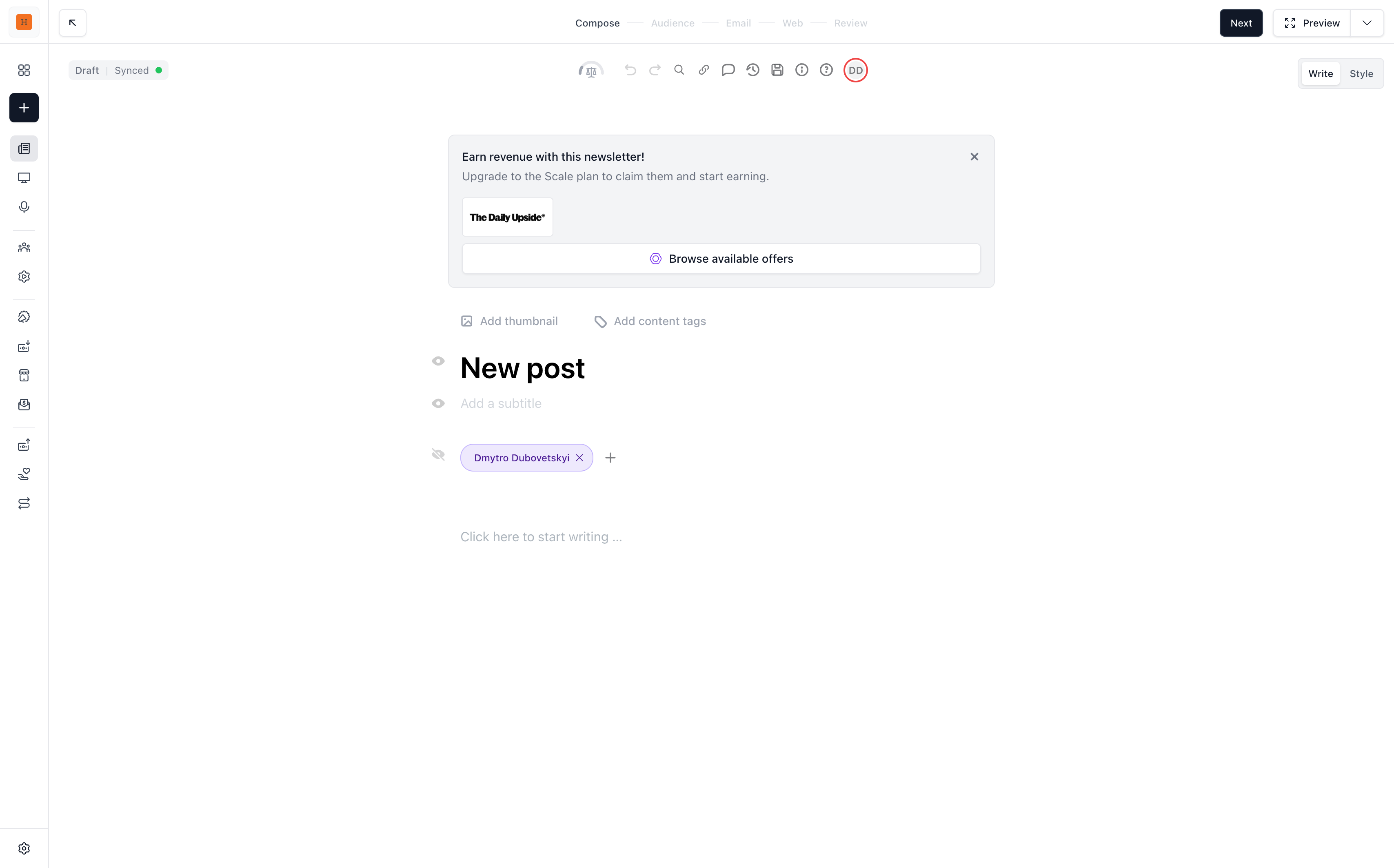
The editor matters because newsletter work is repetitive. If you publish often, the writing and editing surface becomes part of the product's daily feel.
Automations, segments, and analytics#
beehiiv is also strong once you want to operate more deeply. Its feature categories include automations, analytics, verified clicks, API/integrations, segmentation, and surveys.
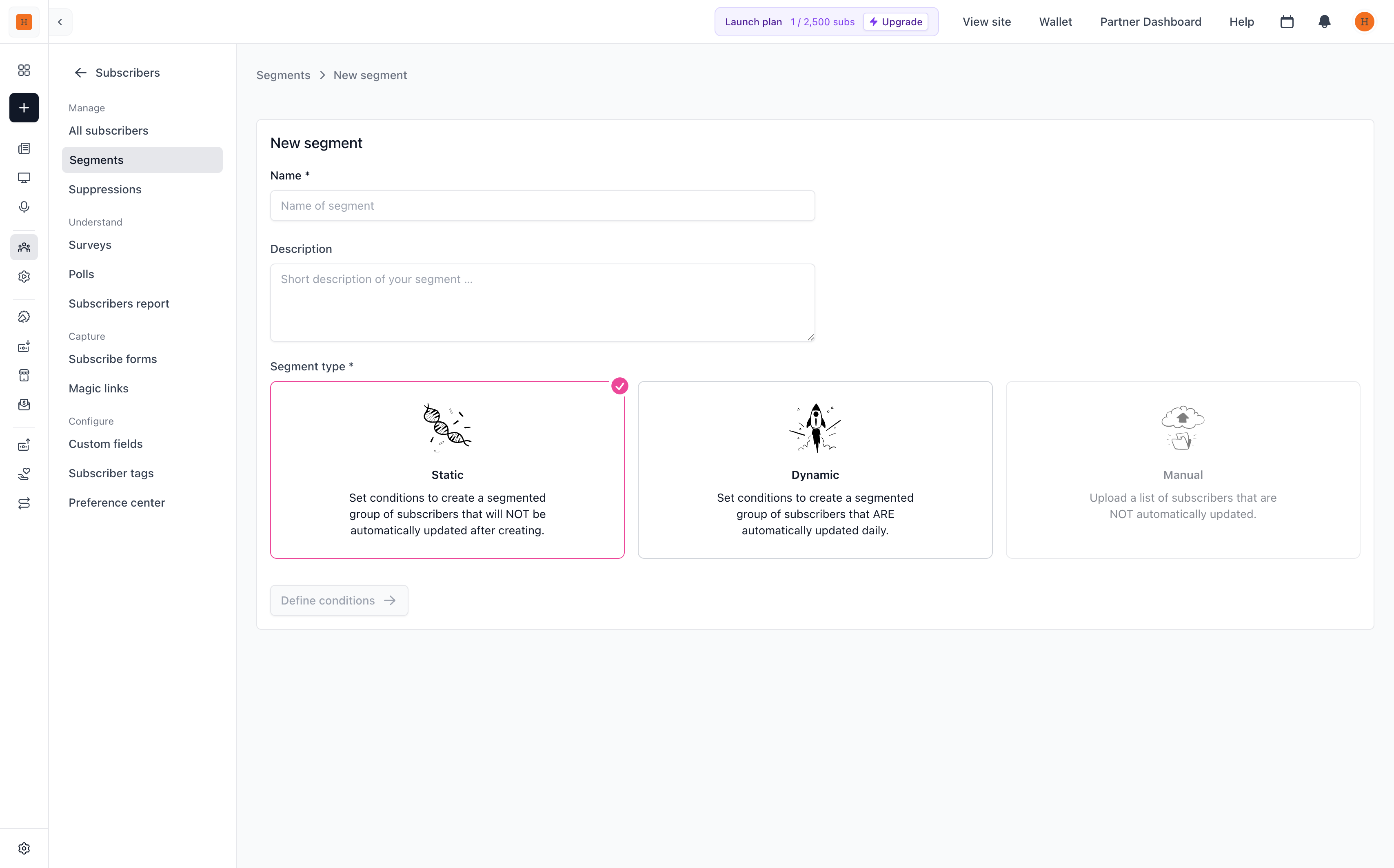
This matters for operators who want to do more than publish the same issue to the same list every time. If you are building reader groups, paid flows, surveys, or automation logic, beehiiv gives you more room than simpler newsletter tools.
beehiiv pricing in 2026#
beehiiv pricing deserves a closer look because this is where the product is both attractive and frustrating.
According to the official beehiiv pricing page, the Launch plan is free and supports up to 2,500 subscribers. The free plan includes newsletters, website and podcast tools, campaign analytics, unlimited email sends, the recommendation network, optimized deliverability, custom domains, Link-in-Bio, AI Website Builder, API access excluding Send API, and beehiiv MCP.
That is generous. The catch is that many of the features people associate with beehiiv's power sit on paid plans.
| Plan | Price shown on beehiiv pricing page | What it unlocks | Honest read |
|---|---|---|---|
| Launch | $0/month | Newsletter, website, podcast tools, campaign analytics, unlimited sends, recommendations, custom domains, Link-in-Bio, AI Website Builder, API access excluding Send API, beehiiv MCP | Strong free starting point if you are validating a newsletter and do not need advanced monetization or automation yet |
| Scale | $43/month billed annually at the checked subscriber setting; beehiiv's FAQ says paid plans start at $49/month | Ad Network, Boosts, 0% take rate on paid subscriptions, digital products, email automations, surveys and polls, advanced website analytics, webhooks, teams, human support | The real "serious creator" plan; valuable if you will use the growth and monetization features, but a meaningful jump for a small newsletter |
| Max | $96/month billed annually at the checked subscriber setting | Remove beehiiv branding, sponsorship storefront, audio newsletters, RSS to Send, up to 10 publications, unlimited team seats, priority support, dynamic content | Best for operators who need white-label control, multiple publications, or higher-end publishing features |
| Enterprise | Custom pricing | Concierge onboarding, dedicated account manager, dedicated IPs, Send API, custom publication limits, VIP support, SSO | For large publishers and teams; not the relevant decision for most solo creators |
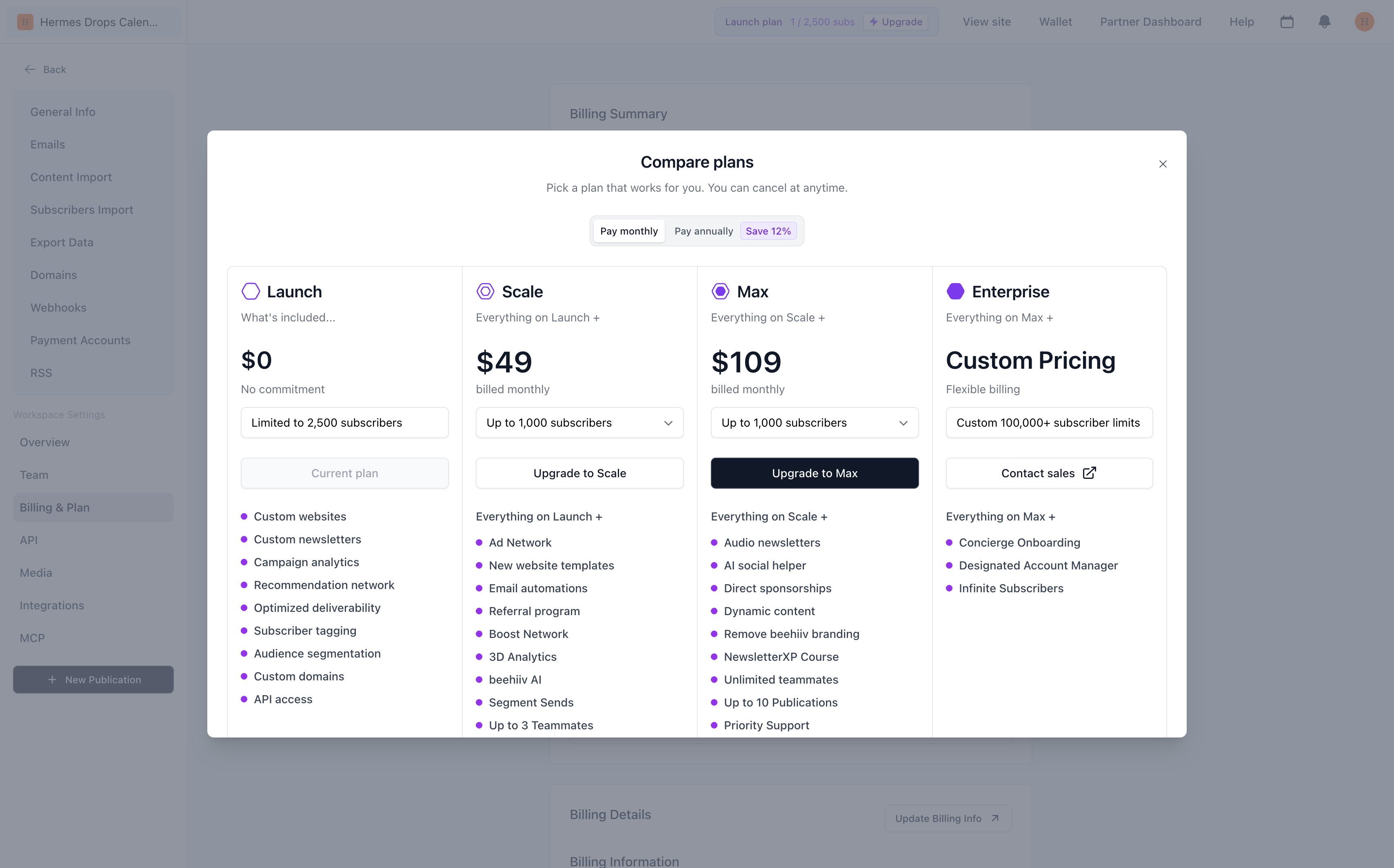
The honest read is this:
- If you are small and only need to publish, beehiiv's free plan is hard to criticize.
- If you are small but need automations, monetization, advanced analytics, webhooks, or paid-subscription tooling, the paid jump can feel early.
- If your newsletter is already making money or you will actively use referrals, ads, Boosts, paid subscriptions, and automations, beehiiv's price is easier to justify.
- If your main growth channel is X or LinkedIn and you mostly need issue publishing, tracked social CTAs, subscriber attribution, and segmentation, a lighter newsletter-first workflow may be cleaner.
This is why some people complain that beehiiv is expensive even though it has a free plan. The complaint is usually not "beehiiv charges too much to start." The complaint is closer to: "the features that make beehiiv useful to me are on paid plans before my small newsletter has enough revenue to justify the software."
Pricing can change, so verify beehiiv's pricing page before making a final decision.
What real users like about beehiiv#
Public user comments line up with the same pattern we saw in testing: people like beehiiv because it is powerful.
In a Reddit thread asking about people's experience with beehiiv, users praised the platform for automations, segments, referrals, flexibility, and creator fit. One user said the referral system was the best part because it could create subscribers without much manual work. Another said beehiiv was "awesome" after switching from Substack because they wanted more site customization and a stronger sense of list ownership.
The useful positive examples are specific:
- In the experience thread, one user called the referral system the "best part" because it helped bring subscribers without much ongoing manual work.
- Another user said beehiiv was "awesome" after moving from Substack because they wanted more customization and a stronger sense of owning the list.
- In a critical thread, even a user with complaints still said they "truly love the editor" and called collaborative editing a standout feature.
The strongest praise usually falls into five themes:
- beehiiv feels built for serious newsletter operators.
- Growth tools like referrals and recommendations are valuable.
- The editor is strong.
- beehiiv can feel more customizable than Substack.
- The platform brings newsletter publishing, website, analytics, and monetization into one place.
That is the real reason to choose beehiiv. If your goal is to build a publication business and you want a lot of newsletter growth machinery built in, beehiiv is a serious option.
What real users dislike about beehiiv#
The negative comments are not all about the same thing, but they cluster around complexity, website customization, support, reliability, monetization expectations, and pricing.
In a May 2026 Reddit thread about the beehiiv website builder, a user said website design in beehiiv felt limited and asked whether it would ever work more like Framer, Webflow, or Wix. The core issue was not that beehiiv had no website tools. It was that the website builder did not fit every business or creator site use case.
Another critical Reddit thread argued that beehiiv had become over-complicated. In the same discussion, another user said they still liked what beehiiv offered and loved the editor, but had run into support, paid subscription, email delay, and reliability issues.
There are also comments questioning how much creators should depend on beehiiv's built-in monetization systems. In a Reddit thread asking whether beehiiv is overpriced, users pushed back on the idea that Boosts or the Ad Network automatically justify the cost for small newsletters. Some argued the stronger revenue path is still selling your own sponsorships, not relying only on platform ad products or recommendation revenue.
The useful negative examples are also specific:
- Website customization: a user wanted beehiiv's site builder to feel closer to Framer, Webflow, or Wix.
- Complexity: a critical user described beehiiv as "over complicated and over featured."
- Pricing and monetization: users questioned whether Boosts and the Ad Network justify paid plans for small newsletters.
- Reliability/support: one user said they liked the editor but still reported issues around support, paid subscriptions, email delays, and reliability.
Treat these as user reports, not universal truths. Plenty of creators are happy with beehiiv. The useful takeaway is narrower: beehiiv's depth is a strength when you need it, and friction when you do not.
| Complaint theme | What users are really saying | How seriously to take it |
|---|---|---|
| Pricing | The free plan is useful, but paid features can feel expensive before the newsletter earns revenue | High if you are small and need paid features early |
| Complexity | beehiiv can feel over-featured when the job is simple publishing | High if you want a lightweight workflow |
| Website builder | The site tools are useful for publication pages but may not satisfy people who want Webflow-style control | Medium to high depending on your site needs |
| Monetization expectations | Built-in ads and Boosts may not replace direct sponsorship sales | High if monetization is your main reason to choose beehiiv |
| Support/reliability | Some users report frustrating support or reliability experiences | Important, but evaluate against your own testing and risk tolerance |
Where beehiiv can fall short#
beehiiv can fall short when the buyer wants a simpler newsletter workflow, a more flexible website layer, or a lighter tool for early-stage publishing.
It can feel heavy for early creators#
If you already know you need referrals, ads, automations, paid subscriptions, advanced analytics, and website tools, beehiiv makes sense.
If you are still trying to publish consistently and turn social attention into subscribers, the feature set can feel like a lot.
The website builder may not fit every site#
beehiiv is strong for newsletter publication pages, archives, and editorial-style websites. But if you want a highly custom brand site, app-like experience, or business homepage, you may feel constrained.
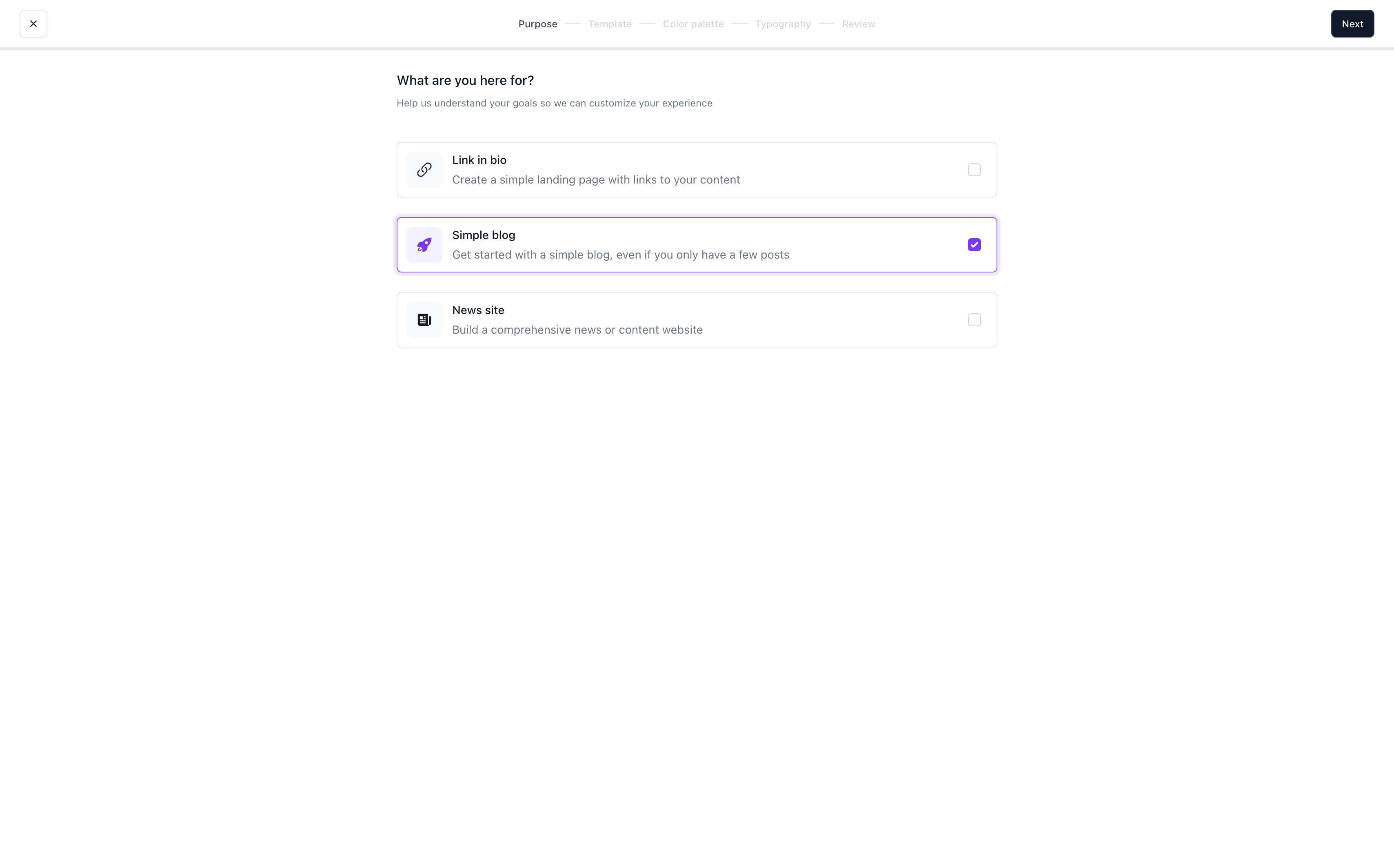
If your newsletter needs to live inside a more custom brand or product experience, test the website builder carefully before committing.
Social promotion is not the core workflow#
beehiiv is a newsletter growth platform. Social distribution exists around the newsletter, but it is not the same as having native X and LinkedIn editors, previews, scheduled posts, and subscriber attribution from specific social links.
If your audience is already on X or LinkedIn, this matters. You do not only need a place to publish the issue. You need a clean way to promote the issue, add the tracked subscribe link, and later see which posts created subscribers.
Who should use beehiiv?#
Choose beehiiv if:
- You want a mature newsletter growth platform.
- You care about referrals, recommendations, Boosts, an ad network, or paid subscriptions.
- You want strong newsletter analytics and segmentation.
- You want one platform for newsletter, website, monetization, and audience growth.
- You are willing to learn a deeper tool because the growth and monetization features matter.
Do not choose beehiiv just because it is popular. Choose it because you actually need the full newsletter-growth suite.
Final verdict#
beehiiv is a strong platform. It deserves its reputation for newsletter growth, monetization, and operator depth. If you want referrals, recommendations, paid subscriptions, ads, automations, and analytics in one platform, beehiiv should be on your shortlist.
The main tradeoff is complexity. beehiiv is powerful because it does a lot. That also means it may feel heavier than necessary if your workflow is simpler: publish the issue, grow the list, understand what worked, and keep the brand experience flexible.
Choose beehiiv if you want a mature newsletter-growth suite.
Consider another platform if you want a simpler publishing workflow, a more custom website layer, or a different balance between newsletter, social promotion, and audience ownership.
FAQ#
Is beehiiv good for newsletters?#
Yes. beehiiv is one of the strongest newsletter platforms for creators and publishers who want growth tools, monetization, automations, analytics, a website, and audience features in one product.
Is beehiiv free?#
beehiiv's official pricing page lists a free Launch plan with up to 2,500 subscribers. The free plan includes core newsletter, website, podcast, analytics, unlimited sends, recommendation network, custom domain, API access, and beehiiv MCP features. Check beehiiv's pricing page for the latest plan details.
How much does beehiiv cost?#
beehiiv's pricing FAQ says paid plans start at $49/month. Pricing depends on subscriber count, plan, and feature needs, so verify the official pricing page before choosing.
What is beehiiv best for?#
beehiiv is best for newsletter operators who want growth and monetization tools: referrals, recommendations, paid subscriptions, ads, automations, analytics, segmentation, and publication-style website tools.
What are the main beehiiv drawbacks?#
The main drawbacks are not that beehiiv lacks features. The concern is the opposite: some users find it complex, heavy, or limited in specific areas like website customization. Public comments also mention support, reliability, pricing, and monetization expectations as concerns for some users.